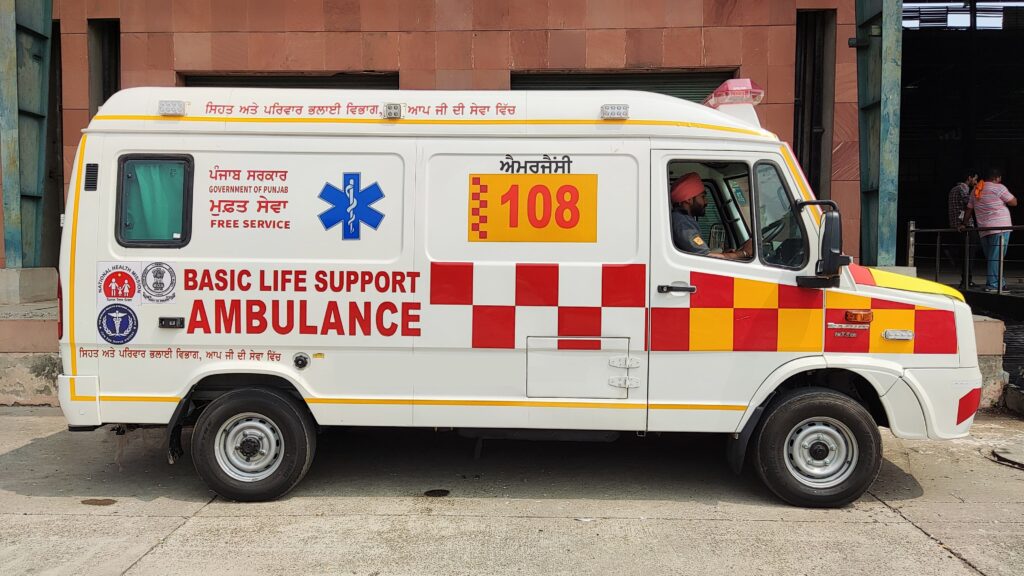
Ambulance Service 108 – The Number That Saves Life
March 4, 2026
We all have heard about 911, the emergency helpline number operational in the United States and Canada, connecting fire, police, and ambulance services for any emergency. But what about India? In a study conducted in the early 2000s, it was estimated that over millions of Indians lose their lives every year to emergencies due to a lack of prompt medical intervention and care.
It was found that a major reason behind such deaths was the lack of awareness and knowledge of what to do or whom to call for help during such situations. Therefore, to address these issues and bring about change in the country’s emergency healthcare system, the Ambulance Service 108 came into existence. With a mission to save lives and make emergency medical care swift, reliable, and easily accessible, today, this service is available across the country, delivering prompt interventions and medical support when seconds count.
Zenplus Private Limited, in partnership with the state government and the National Health Mission, operates the 108 ambulance service across several states in India, such as Punjab, Bihar, and Uttar Pradesh. It aims not only to provide timely emergency care but also to maximize the golden hour and enhance patient outcomes in all emergency situations. In this article, we shall take a closer look at Ambulance Service 108, its history, significance, how it functions, and the role it plays in boosting the nation’s healthcare system. Let’s get started!
Understanding the 108 Ambulance Service
The 108 ambulance number is a single, unified emergency helpline that connects all three emergency responses (fire, police, and medical) to ensure you receive prompt care and support when you need it most. It’s a simple toll-free number that anyone can call during emergency situations to get instant help within minutes. The most interesting feature about this service is not only its free accessibility but rather the seamless coordination and connectivity it ensures throughout the country. It enables each and every individual to access swift and reliable emergency support when time is critical. Operating through a public-private partnership model, the 108 service ensures fast response time and quicker medical interventions whenever and wherever needed.
History and Significance of the 108 Ambulance Service
As mentioned earlier, a study was conducted in the early 2000s in which it was found that a large number of people across India lost their lives in medical emergencies due to a lack of prompt attention and support available. Addressing this healthcare challenge, the Emergency Management and Research Institute (EMRI) of India and the government of Andhra Pradesh launched the Ambulance Service 108.
In its initial stage, the service was a regional initiative, which over time gained popularity and attention, transforming it into a pan-India service. Various state governments and public-private companies joined together to make the service available across multiple states. Today, the 108 Ambulance service is operational in over twenty states in the country, with Zenplus being one of the major organizations operating and managing large segments of this life-saving network.
How Does the 108 Ambulance Number Work?
There’s no denying that the process of utilizing the 108 ambulance service is extremely simple; however, the efficiency behind it is driven by well-structured systems and complex frameworks that ensure swift dispatches and immediate support when moments matter. Let’s have a look at how the system functions:
- Call 108: When any person dials the emergency ambulance number 108, the call is directed to an Emergency Response Centre (ERC). These centres are generally set up at regional or state levels and staffed by trained professionals who are available 24/7 to deliver help whenever needed. It ensures that timely help reaches those in critical moments, maximizing the golden hour and patient outcomes.
- Detail Sharing & Assessment: Once connected to the Emergency Response Centre, the operator enquires for necessary information regarding the patient’s condition and current location. This data is collected to understand the nature of the emergency, the number of people involved, and the kind of help required.
- Ambulance Dispatched: Based on the information gathered, a suitable Basic Life Support (BLS) or Advanced Life Support (ALS) ambulance is dispatched immediately to the patient’s location. Furthermore, during the wait period, the operator stays connected with the caller, providing guidance on proper emergency care, essential first aid, and safety measures.
- On-Site Care: Once the ambulance arrives at the location, trained paramedics and EMTs deliver necessary pre-hospital care and stabilize the patient before proceeding with the swift transfer.
- Medical Transport & Continuous Care: Depending on the severity of the patient, the ambulance may be rushed to the nearest hospital or a specialized facility for the particular condition. In critical situations, the ambulance team may also coordinate with the receiving hospital to ensure that the necessary arrangements are made early on for the patient’s arrival.
Throughout the process, that is, right from the moment a call is placed till the patient’s admission in the hospital, the emergency response centre ensures smooth and efficient coordination, creating an effective chain of emergency care when seconds matter.
108 Ambulance Service Advantages
With the number of accidents, trauma cases, and critical medical conditions being on the rise, the 108 emergency ambulance service today serves as an integral part of the healthcare system. It ensures timely pre-hospital care, swift transfers, and coordinated medical response that significantly improve survival and recovery rates. Here are some of the key benefits of the 108 ambulance service
- 24/7Availability: The 108 emergency helpline is accessible round the clock, ensuring no cry for help goes unnoticed and unanswered. The emergency response centre operates 24/7 across multiple states, providing timely medical response during critical moments.
- Trained & Experienced Staff: Each ambulance is staffed by highly skilled medical professionals such as paramedics and EMTs, who are trained to deliver timely medical interventions and ensure hospital-grade care on the go.
- GPS-Enabled Systems: All ambulances operated under the 108 emergency system are fitted with GPS-enabled devices, enabling the ERC to track vehicle moments and ensure swift transfers. It enables effective fleet management and monitoring.
- Free of Cost: One of the major aspects of this nationwide emergency service is that it is available at zero cost. This free nature makes the service accessible to remote and underserved communities of the country, creating a society where urgent medical care is not a luxury but a basic right for all.
Conclusion
The 108 Ambulance Service was started with a single, profound mission: to make emergency healthcare accessible to all. It was this mission that transformed the small initiative into a pan-India service today. With the changing times and newer developments, the 108 ambulance service too continues to evolve through better technology, enhanced features, and faster coordinated systems. From rapid response to free, equitable services, the 108 service has become a critical pillar of India’s emergency care sector. It is no longer just an ambulance helpline, but a comprehensive emergency response ecosystem that brings timely medical support in minutes, directly to those who need it most.
FAQs
- Is the 108 service free or paid?
The 108 ambulance service is completely free of cost for patients. It is a government-run service that works through a public-private partnership model, enabling freely accessible emergency care to those who need it most.
- What is the 108 Ambulance Service?
The 108 ambulance service is India’s integrated helpline number that provides prompt emergency response for fire, police, or medical incidents.
- How do I call the 108 service?
Anyone can dial 108 to seek immediate help during an emergency. The call is directed to the emergency response centre, where a trained operator assesses the situation and dispatches an ambulance within minutes.